
Comparison Technical Guide
Immersion Battery vs Cold-Plate Liquid Cooling: Which Thermal Solution Fits Your EV?
Direct Answer
Cold-plate liquid cooling usually transfers heat indirectly through plates, channels, and coolant loops. Immersion battery packs place cells and BMS in insulating cooling fluid, bringing thermal management closer to the heat source. For two-wheelers, tricycles, swapping, and compact fast-charge projects, immersion is worth evaluating.
Key Takeaways
- Cold-plate liquid cooling is a mature indirect liquid-cooling route.
- Immersion is a direct-contact thermal management route using insulating fluid.
- Cold-plate systems require plates, pipes, pumps, joints, and sealing.
- Immersion can fit compact fast-charge and safety-focused projects.
Comparison table
| Item | Cold-plate liquid cooling | Immersion battery pack |
|---|---|---|
| Heat transfer | Indirect through cold plates or channels | Direct contact between insulating fluid and cells |
| Distance to heat source | Affected by plate position and interface materials | Closer to cell surfaces |
| System complexity | Pipes, pump, plates, joints, sealing | Fluid, sealing, compatibility, insulation verification |
| Maintenance | Coolant loop and leakage management | Fluid condition and sealing reliability management |
| Applications | Automotive platforms and high-power systems | Two-wheelers, tricycles, swapping, fast charging, compact packs |
How to choose
If the platform already has a vehicle-level liquid cooling system, cold-plate cooling may integrate more easily. If the project is a two-wheeler, tricycle, battery swapping pack, or compact fast-charge battery, immersion may be more relevant.
FAQ
Is immersion cooling a type of liquid cooling?
Yes, but it differs from cold-plate liquid cooling because the insulating fluid directly contacts cell surfaces.
What is the main difference between immersion and cold-plate cooling?
Cold-plate systems usually transfer heat indirectly. Immersion systems place insulating fluid in direct contact with cell surfaces, resulting in different structures, maintenance needs, and application fit.
Does every fast-charging EV battery require cold-plate cooling?
No. Two-wheelers, swapping systems, and delivery fleets can evaluate air cooling, potting, cold-plate cooling, or immersion based on space, cost, temperature rise, and maintenance needs.
Sources and Content Review
Sources
- Wuxi Xinhui New Energy Safety Technology product brochure and technical materials
- XD18169X23T CCC certificate
- National compulsory product certification test report cover
- GB 43854-2024 related certification requirements
- Final project specifications are subject to the mutually confirmed specification
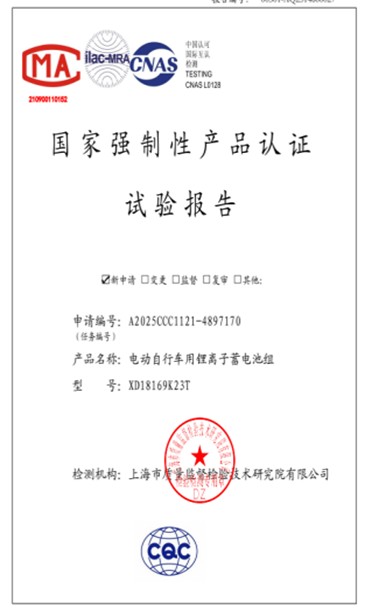
Claim, evidence and scope
| Claim | Evidence | Scope |
|---|---|---|
| Cold-plate liquid cooling usually transfers heat indirectly through plates, channels, and coolant loops. Immersion battery packs place cells and BMS in insulating cooling fluid, bringing thermal management closer to the heat source. For two-wheelers, tricycles, swapping, and compact fast-charge projects, immersion is worth evaluating. | Product materials and the sources linked above | Subject to project validation and the mutually confirmed specification |
| XD18169X23T certification information | CCC certificate and test report cover | Only the model and scope stated on the certificate |
Content Review
- Product team
- Certification document team
- Last updated: 2026-05-24
Need a thermal solution comparison?
Send your vehicle platform and thermal management target.
Submit Inquiry